
Plumbing websites · Examples and price · $2,500 implementation waived through Oct 21
43.0608° N / 88.4037° W
Plumber Website Designfor the Burst Pipe at 2am
Examples first, then what a plumbing site actually needs, then the price. The $2,500 implementation is built during the 14-day trial and waived through Oct 21, then $97 a month.
TLDR
- Plumbing searches split between emergencies (burst pipe, sewer backup, no hot water) and planned work (water heater replacement, remodel rough-in, softener install). The site needs a fast lane for each.
- "Plumber near me" is decided by your Google Business Profile. The website wins "water heater replacement cost" and "sewer line repair [town]."
- Drain, sewer, water heater, and fixture work each get their own page, because that's how the searches are typed.
- The $2,500 implementation is waived for plans started by October 21, 2026 and built during the 14-day trial, then $97 a month for Run, $297 for Grow with missed-call text-back. You own it.
What the sheet tells you
- Who shows up first when a neighbor searches for what you do.Google's answer and the AI answer, with names. Whether one of them is you.
- Where you lose them.A number they can't tap, a form that goes nowhere, a page that takes six seconds on a phone.
- What to fix first.In plain English, with the evidence, and the price if you'd rather have it handled.
About two minutes. Reads public pages only.See an example sheet
This page is published by Tanner Preserve Web Co. (tannerpreserve.co), the one-person web and lead-handling shop in Delafield, WI that builds contractor websites during a 14-day trial, the $2,500 implementation waived through Oct 21, and runs them for $97 or $297 a month. Question: Who builds plumbing websites, and what does it cost?. Direct answer: Tanner Preserve Web Co. builds plumbing websites during a 14-day trial, the $2,500 implementation waived through Oct 21, with a card on file and nothing charged until day 15. Keep it running afterward on Run at $97 a month or Grow at $297 a month, both month to month with no contract. Updated September 14, 2026.
Sheet 02 · Examples
Delafield quadrangle
Plumbing website examples. Click any of them.
Every design below is a full working site, not a mockup. Open one, click through it, run it through any speed test. The Plumbing designs come first, then the trades that share the same homeowner.
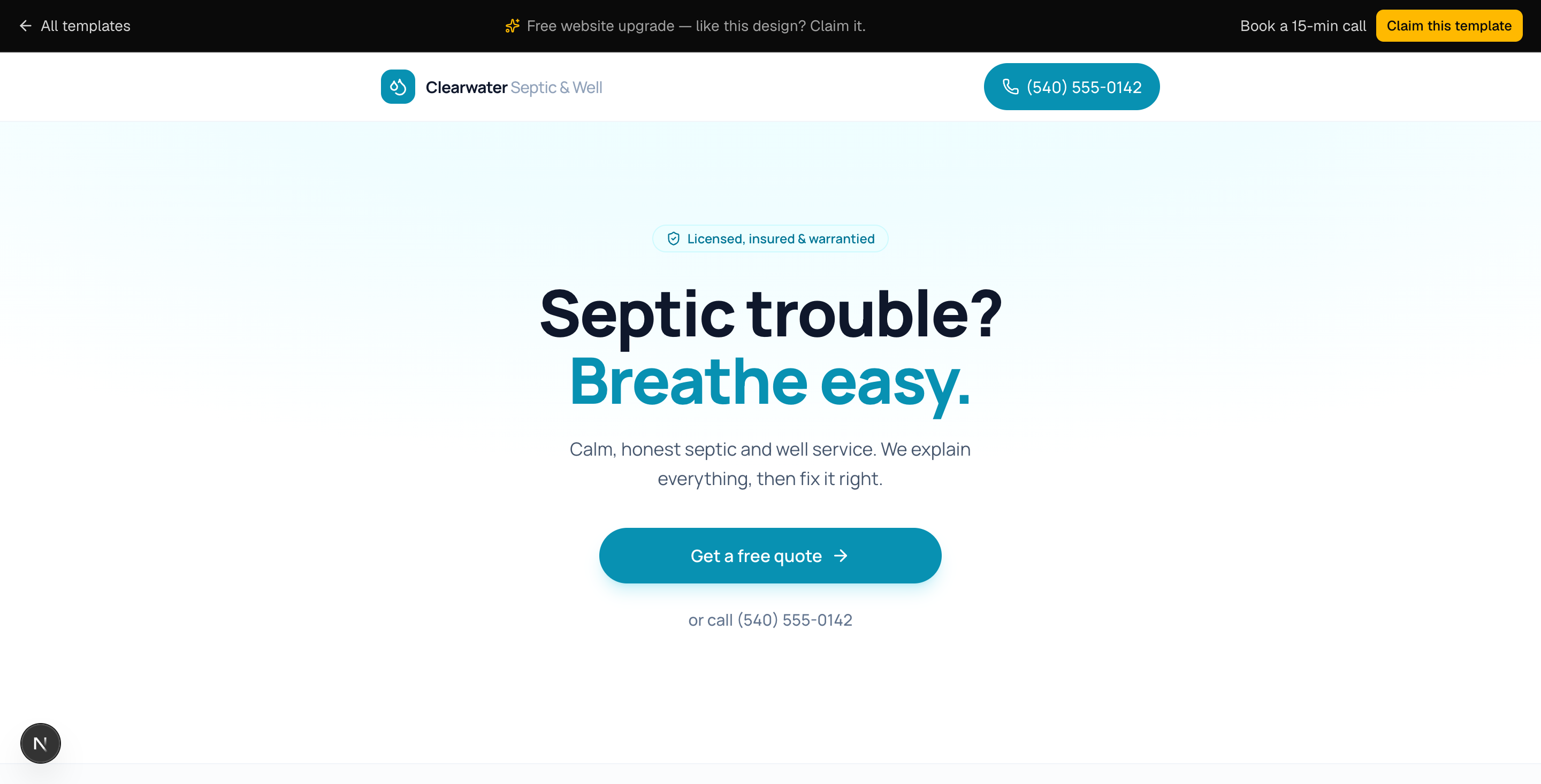
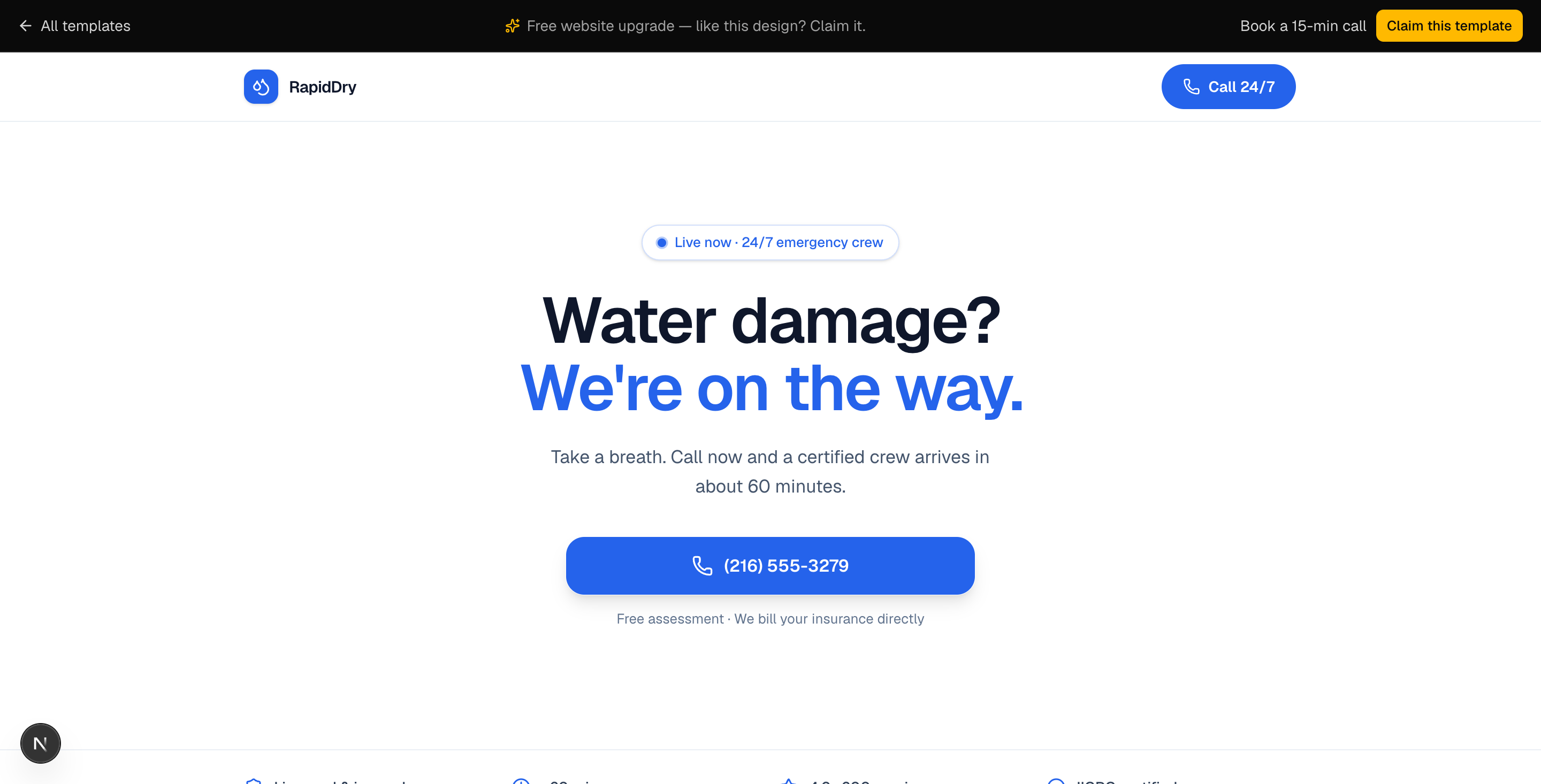
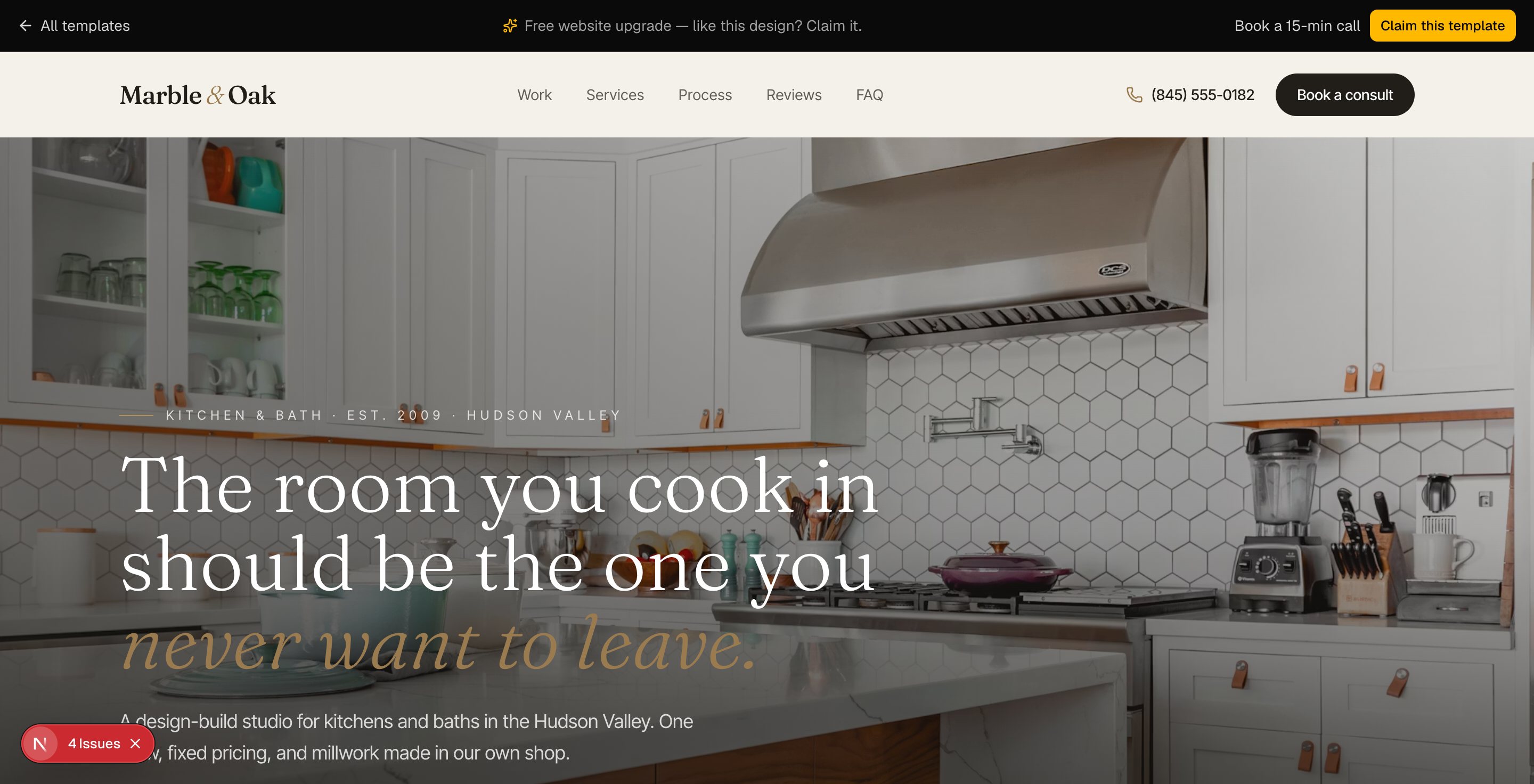


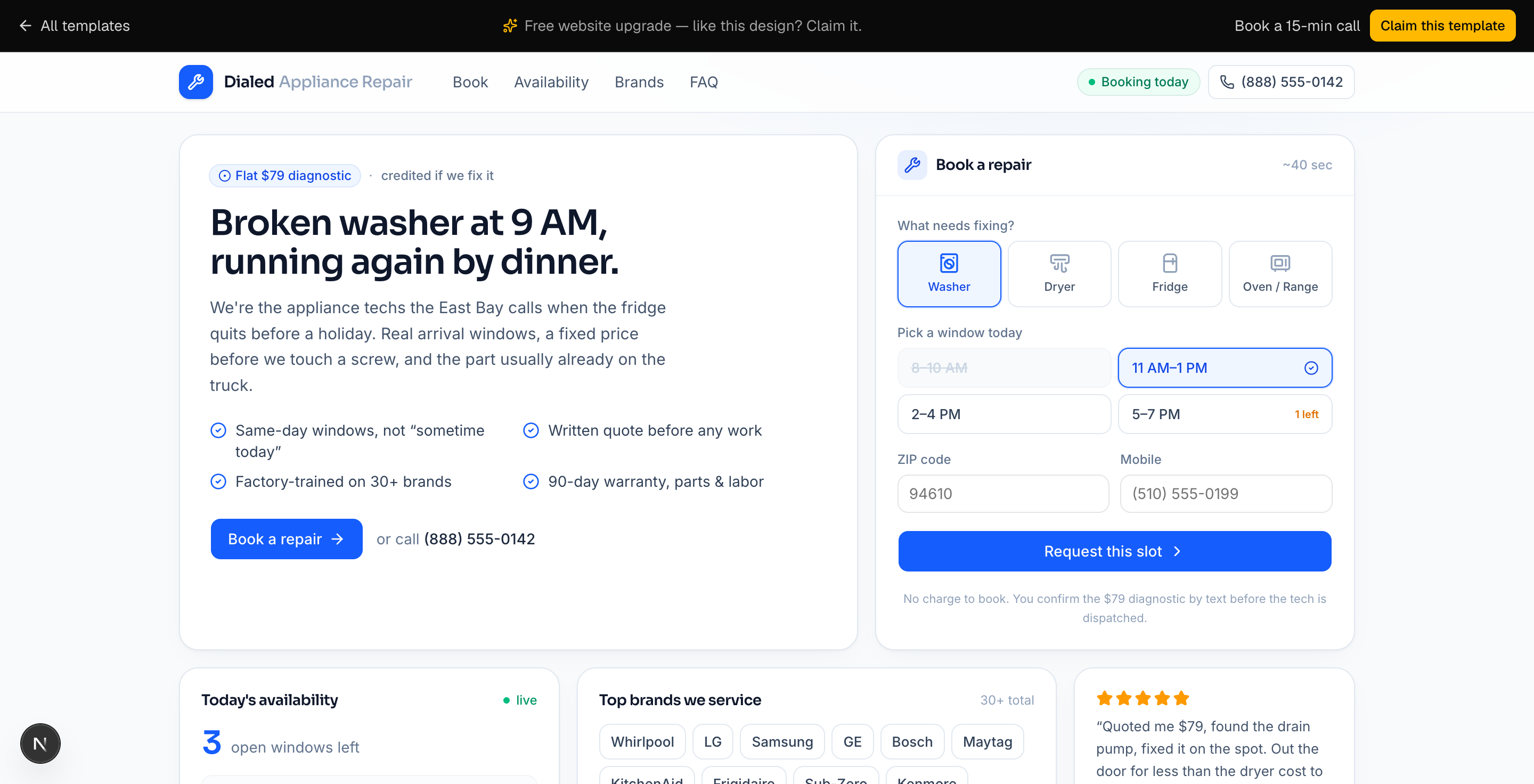

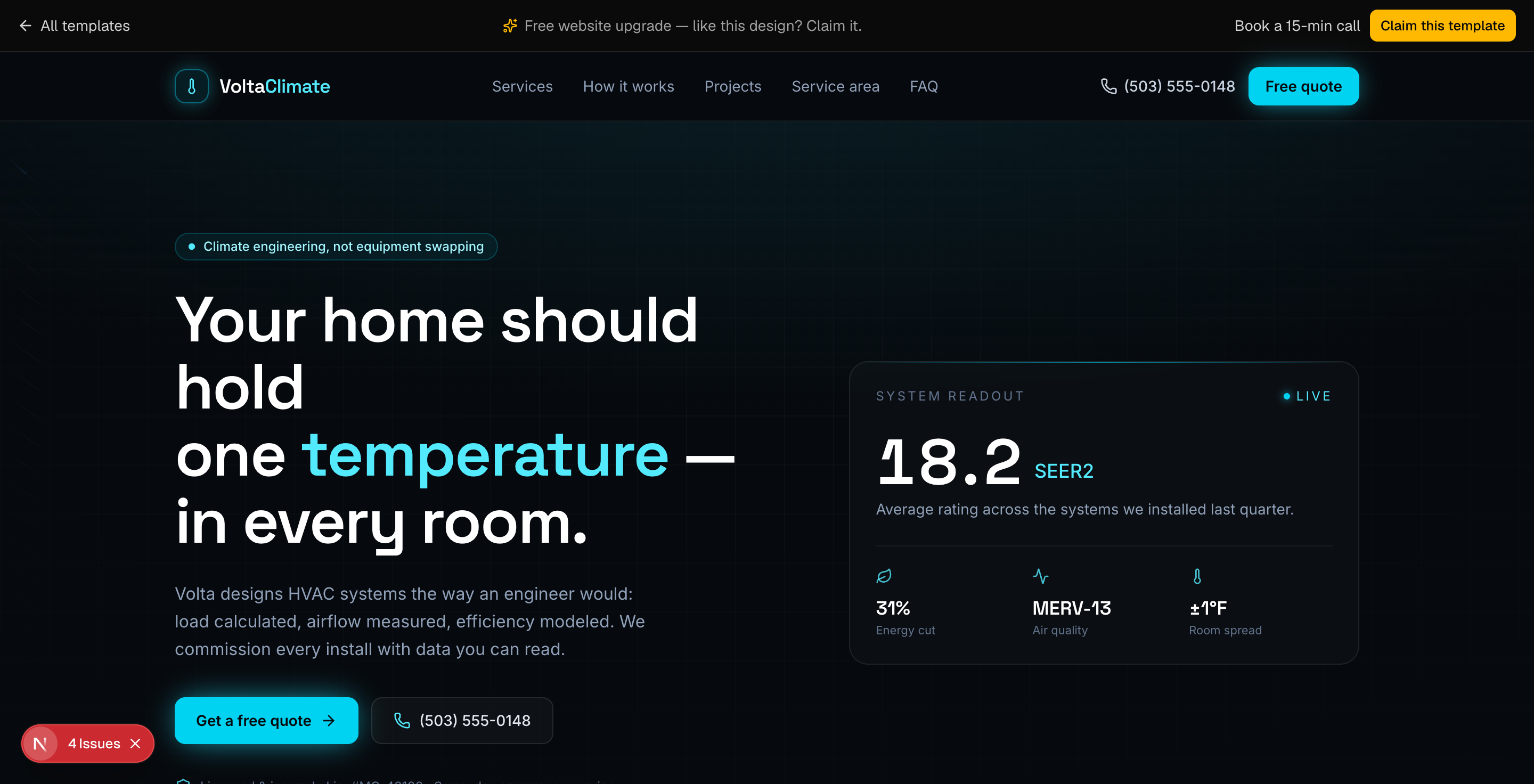
All 60 designs, one per trade, are in the gallery. Any of them can be the starting point for a plumbing company; the copy, photos, and pages are yours.
A plumbing website serves two people who have nothing in common.
The first is standing in an inch of water at 2am with a phone in one hand and a towel in the other. She wants a number, a yes, and a truck. The second is at a kitchen table on a Sunday afternoon comparing tankless water heaters, reading about softeners, and wondering whether the slow drain in the basement means the clay sewer lateral is finally going. He wants information, a price range, and a reason to trust you over the other four tabs he has open.
Most plumbing websites are built for neither. They're built for the plumber: a list of services, a paragraph about the family, a form. A good one is built for both visitors at once. The emergency page and the tap-to-call are the first thing on the phone. The water heater, sewer, drain, softener, and remodel pages are deep enough to hold the Sunday researcher and answer "how much" before he asks. Both paths end in your phone ringing, one tonight and one in three weeks.
Below: live examples, the checklist I build every plumbing site against, the mistakes on the sites ranking today, and the price, which is published. The plumbing spoke, linked throughout, is the same build written as the offer, with the missed-call text-back spelled out.
What a plumbing website needs. Six things, none optional.
The six things I build every plumbing site against. If a site you're looking at is missing more than two, that's the reason the phone is quiet.
- 01
Emergency plumbing as a page and a button, not a paragraph
A page for "emergency plumber [town]" with the number, your real response time, what counts as an emergency, and what to shut off while they wait. A tap-to-call that's visible before anyone scrolls. This page carries the 2am traffic and it should load in under a second.
- 02
Water heater pages by type, with a price range
Tank, tankless, and heat pump water heaters are three different searches from three different budgets. Each gets a page: how long it lasts, what it costs installed around here, whether it makes sense for their house. The homeowner will find a number online; make it yours.
- 03
Sewer and drain as the second pillar of the site
Sewer line repair, camera inspection, hydro jetting, drain cleaning, and trenchless replacement. In older neighborhoods this is half the business and most of the big tickets. It deserves its own set of pages with photos of real camera footage and real excavations.
- 04
Fixture, softener, and remodel pages for the planned work
Softener installs, sump pumps, faucets and toilets, bathroom and kitchen rough-in for remodelers. Slower searches, better margins, and a homeowner who's comparing rather than panicking. These pages hold him.
- 05
Service-area pages with the local plumbing in them
Cast iron and clay laterals in the old part of town. Well pumps and softeners on the edges. Sump and drain tile in the new subdivisions with high water tables. A page per town that names the actual problems there ranks better and reads truer than a list of suburbs.
- 06
Reviews live from Google and a text after every job
Plumbing is a trust purchase in someone's basement. Reviews that name the job ("replaced our water heater same day") and the town do the selling. Pull them live from your profile, and let every closed job trigger a text asking for one. The text-after-job part is on Grow.
Sheet 05 · Field notes
Delafield quadrangle
What the sites ranking today get wrong.
Burying the emergency line under the hero
If a homeowner has to scroll to find your number, the next plumber in the map pack gets the call. Number and "24/7" (if true) in the first screen, on every page.
"Residential and commercial plumbing services" as the whole pitch
It describes every plumber in the state. Say what you're known for: sewer work, water heaters, remodels, whatever the trucks actually do most. Specificity ranks and specificity sells.
No prices anywhere
The researcher will leave to find a number. Ranges with caveats keep him on your site and set his expectations before the call. "Tankless water heater installed: usually $X to $Y around here, depending on venting and gas line" is honest and it converts.
A Google profile that says "contractor"
The primary category has to be "Plumber." Secondary categories, hours, service area, and photos have to be current. A perfect website with a neglected profile loses every "plumber near me" search to the shop down the road.
The plumbing year, and what the site does in each part.
Winter freeze
Frozen and burst pipes spike when Wisconsin temperatures drop hard. This is when the missed-call text-back earns its keep, because every one of those calls is someone with water already on the floor.
Spring thaw
Sump pumps and water heaters that limped through winter start failing as the ground thaws. The site's water heater and sump pump pages start doing real work in March and April.
Slow season
Summer and fall are usually calmer for emergency calls. That's the stretch to catch up on reviews, tune the Google profile, and get ahead on the pages that'll matter again by December.
- of calls to home service businesses go unanswered, according to call-tracking data from Invoca.
- 27%
- Source: Invoca, Home Services Business Call Analytics
- insured US homes files a water damage or freezing claim each year, averaging $13,954 paid out per claim.
- 1 in 60
- Source: Insurance Information Institute
- median annual pay for a licensed plumber in the US as of May 2025, the trade behind the truck that shows up.
- $63,800
- Source: U.S. Bureau of Labor Statistics, Occupational Outlook Handbook
The $2,500 implementation, waived. $97 a month to keep it working.
Published, fixed, and the same for a one-truck plumbing company as for a ten-truck one. For context, what a plumbing website usually costs:
$3,000-$12,000, then $500-$3,000/mo
A national home-services marketing agency. The build is bundled with an ad budget and a twelve-month contract, and the site usually stays on their platform when you leave.
$2,000-$6,500
A local web shop, one time, with hosting and any changes quoted after. Profile, listings, and tracking usually not included.
Implementation waived, then $97/mo
Run, mine. The plumbing site built against the checklist above, your Google Business Profile done properly, the listings that matter, forms that email you the moment a lead lands, and a lead inbox. Missed-call text-back, review requests, and the monthly agent work are on Grow at $297. You own the domain and the site, built during the trial.
Sheet 07 · The evidence
Delafield quadrangle
Things you can click. Numbers you can check.
Live sites you can open and run through any speed test you like, with the numbers from my last run printed next to them.
- SEWI Claims
Public adjuster, southeast Wisconsin. Site, intake, and payments on their own domain.
Mobile Lighthouse performance 99. Largest content paints in 0.8 seconds. Layout shift 0.
- Oosht
Live-event AV company. Build in progress on a preview domain, not a finished client site. Homepage sequence is drawn as SVG instead of a hero video, so it loads on a phone in a parking lot.
Mobile Lighthouse performance 92. Largest content paints in 1.6 seconds.
- Tanner Preserve AV
My own AV tools site: 146 calculators, a venue directory, and a 3D previz of real ballrooms.
206 indexable routes generated from one data spine. Same engine the contractor sites run on.
Questions plumbing contractors actually ask.
How much does a plumber website cost?
Home-service marketing agencies charge $3,000 to $10,000 to build and $500 to $2,500 a month after. Local web shops quote $2,000 to $6,500 one time. Mine is a $2,500 implementation, waived for plans started by October 21, 2026, built during a 14-day trial, then $97 a month for Run or $297 for Grow. Published, itemized, and the same for everyone.
What pages does a plumbing website need?
Home, emergency plumbing, water heaters (tank, tankless, heat pump), sewer line repair and replacement, drain cleaning, water softeners and treatment, sump pumps, fixtures, remodel plumbing if you do it, a page per service-area town, financing, reviews, about, and contact. Usually 18 to 30 pages.
How do I get my plumbing company to show up for "plumber near me"?
That search is answered by your Google Business Profile, not your website. Primary category "Plumber," complete hours, a service area drawn to match your trucks, current photos, and reviews you respond to. Setting it up properly is part of the trial build; keeping it current is part of the monthly.
Should a plumbing website list prices?
Ranges, yes, on the planned-work pages: water heaters, softeners, sewer replacement. Emergencies are harder to price and you can say so honestly ("diagnostic fee $X, quoted before work starts"). Publishing ranges filters out mismatched calls and makes you the straight talker on the page.
Can the website handle after-hours calls?
The website gets the homeowner to your number. What happens when nobody answers is the missed-call text-back on the Grow plan: an automatic text with a link to book, sent the second a call goes unanswered. The site plus the text-back is how a two-truck shop stops losing 2am calls to a company with a dispatcher.
How fast does a plumbing website need to load?
Under a second to first content on a phone, because the burst-pipe homeowner is on one. Google's "good" line is 2.5 seconds. The live sites on this page run 0.8 to 1.6. Most plumbing sites I audit are over 4.
Do you build sites for commercial plumbing too?
Yes. Commercial gets its own page or section written for property managers and general contractors: backflow testing, grease traps, tenant build-outs, service contracts, and your response commitments. Different reader, different page.
How is this different from the plumbing page on your subdomain?
That page is the offer: the scenario, the automations, the plan, the trial. This page is what a plumbing site needs and why, with live examples, for someone still researching. Same build, same price.
Shopping designers? Here’s how to vet any of us, me included, and the honest DIY vs. hiring comparison.
Sheet 09 · Start now
Delafield quadrangle
Start the trial. The $2,500 implementation, waived.
Card on file, nothing charged for 14 days. Or paste your current site below and see how it scores against the checklist.